
Compass Academy · A Trainable Course
The Swarm
A Two-Track System Audit
What an electric cooperative’s OSHA file reveals about the conditions its lineworker was operating inside — examined from two perspectives.
The public record of a single morning.
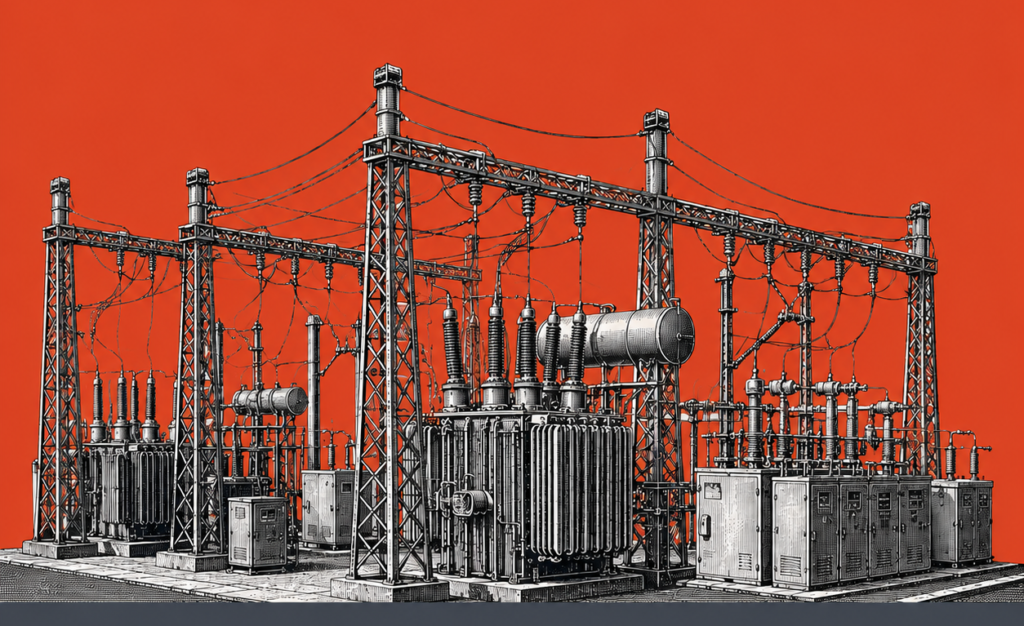
In late August, a senior lineworker at a rural electric cooperative was killed by a hornet swarm during routine substation maintenance. The OSHA investigation that followed produced a public record of the conditions around him: a heat policy that did not trigger a different staffing decision, an emergency response measured in twenty minutes, protective equipment stored in a vehicle outside the substation fence, dispatch protocols that lacked professional bee-removal contacts, a service-restoration metric that made the safe choice the slow choice, and a procurement timeline that had not equipped crews with thermal imaging despite the documented seasonal recurrence of biological hazards in substation equipment.
This course walks through that public record from two perspectives at once. The workforce track teaches field crews to recognize and name the system conditions they operate inside. The leadership track teaches the people responsible for those conditions to audit what their organization is providing. Both tracks anchor in the same evidence. Both tracks produce a structured deliverable. The live debrief is where the two deliverables meet.
The audit question is not “did your worker make a good decision” — but did your organization make the investments this cooperative was forced to make only after a worker died?
One case study. Two audits, running in parallel.
The tracks are designed to be taken at the same time by different stakeholders in the same organization. They share the same evidence. They differ in what they ask you to audit.
Workforce Track
Naming what you operate inside
For field crews, frontline workers, and other employees who operate within the conditions their employer designs.
Produces
A conditions-naming report
A structured articulation of the system conditions you’ve identified in your own workplace — in language you can bring to safety meetings, dispatch conversations, and supervisor debriefs.
Leadership Track
Auditing what you provide
For safety directors, L&D leads, operations managers, HR business partners, and others responsible for designing the conditions field crews operate within.
Produces
A system-audit report
A structured assessment of the system investments your organization has and has not made — anchored against the OSHA findings and the remediations the cooperative was forced to implement.
Where the two reports meet
The Live Debrief
Workforce and leadership bring their parallel reports into the same room and compare what each audit found. The debrief produces a third document — the gap inventory — which is the course’s substantive deliverable.
What you’ll be able to do.
Workforce
- Identify the system conditions documented in the OSHA file that shaped the lineworker’s morning — in language that names the conditions, not the worker’s decisions.
- Distinguish between conditions workers navigate and conditions employers are responsible for providing.
- Recognize the same kinds of conditions in your own workplace and articulate them concretely.
- Produce a conditions-naming report with your intact crew, in language you can bring upward.
- Participate in the live debrief as the worker-side voice in a structured audit conversation.
Leadership
- Identify the conditions the cooperative was responsible for providing and did not provide.
- Distinguish between worker-skills failures and system-design failures in incident analysis.
- Apply a structured audit framework to your own organization’s safety system.
- Produce a system-audit report with a leadership peer group, naming investments made, not made, and the gaps between.
- Participate in the live debrief as the leadership-side voice in a structured audit conversation.
How the course moves.
Shared opening, parallel tracks, shared close.
Shared Opening · 15 min
Lesson 1 — The Public Recordboth tracks
▼ tracks run in parallel ▼
Workforce · Lesson 2W
The Conditions Around the Worker
12 min digital
Workforce · Lesson 3W
Producing Your Conditions-Naming Report
18 min digital + 60 min small-group
Leadership · Lesson 2L
A System-Design Inventory
12 min digital
Leadership · Lesson 3L
Producing Your System-Audit Report
18 min digital + 60 min small-group
▲ tracks reconvene ▲
Shared Closing · 45 min
Lesson 4 — The Live Debriefboth tracks, together
What this course does not do
It does not teach risk assessment as a worker skill.
It does not produce field-crew certifications in safety procedures. It does not certify that any learner understands proper protocols for multi-risk situations. It produces two reports — a workforce conditions-naming report and a leadership system-audit report — and a gap inventory that emerges from the live debrief between the two audiences.
The reports are inputs. The gap inventory is the substantive deliverable.
A note on the case study
The case is a teaching adaptation of an actual OSHA-investigated fatality at a U.S. electric cooperative. The location, company, and names are pseudonyms; the setting has been relocated to a continental-US rural context for teaching accessibility. The structural facts — the system conditions OSHA documented, the pattern of the incident, the response timing, and the remediations the cooperative implemented afterward — are preserved from the public record, and those remediations are the audit anchors for both tracks.
A note on the live debrief
The debrief is not workforce reporting to leadership, or leadership presenting findings to workforce. It is a structured comparison of two parallel reports anchored in the same evidence. The Safety Director or L&D lead facilitating is not the authority in the room — they are one participant, presenting the leadership audit alongside the workforce’s report. Its purpose is a shared document: a gap inventory naming what both audiences identified, where the audits converged, where they diverged, and what organizational actions the comparison suggests.
Both tracks begin in the same place: the public record of what the OSHA file documents.
Begin Lesson 1 — The Public Record